

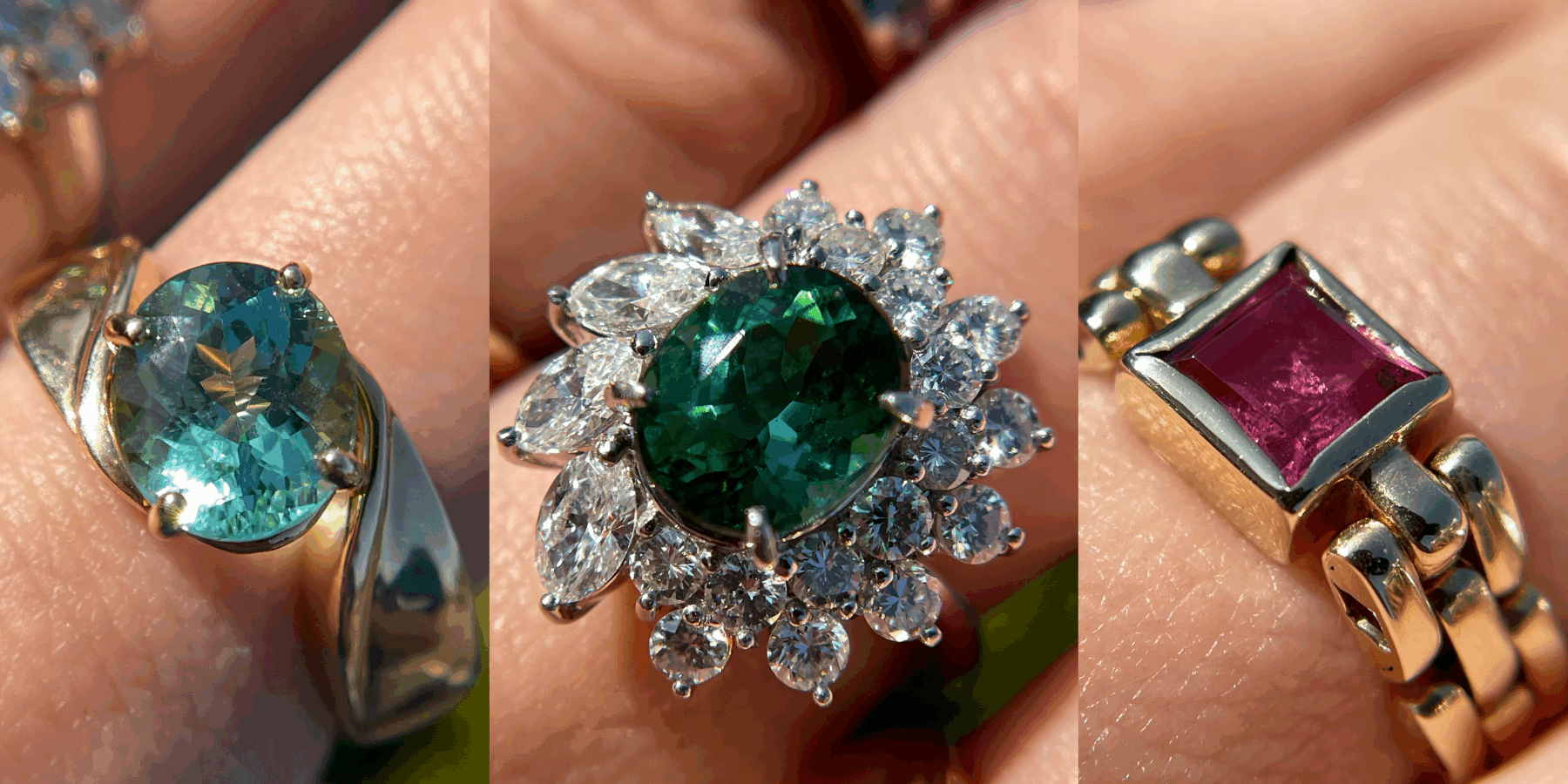
Celebrating October Birthdays: The Brilliance of Tourmaline
- Natalie Iredale
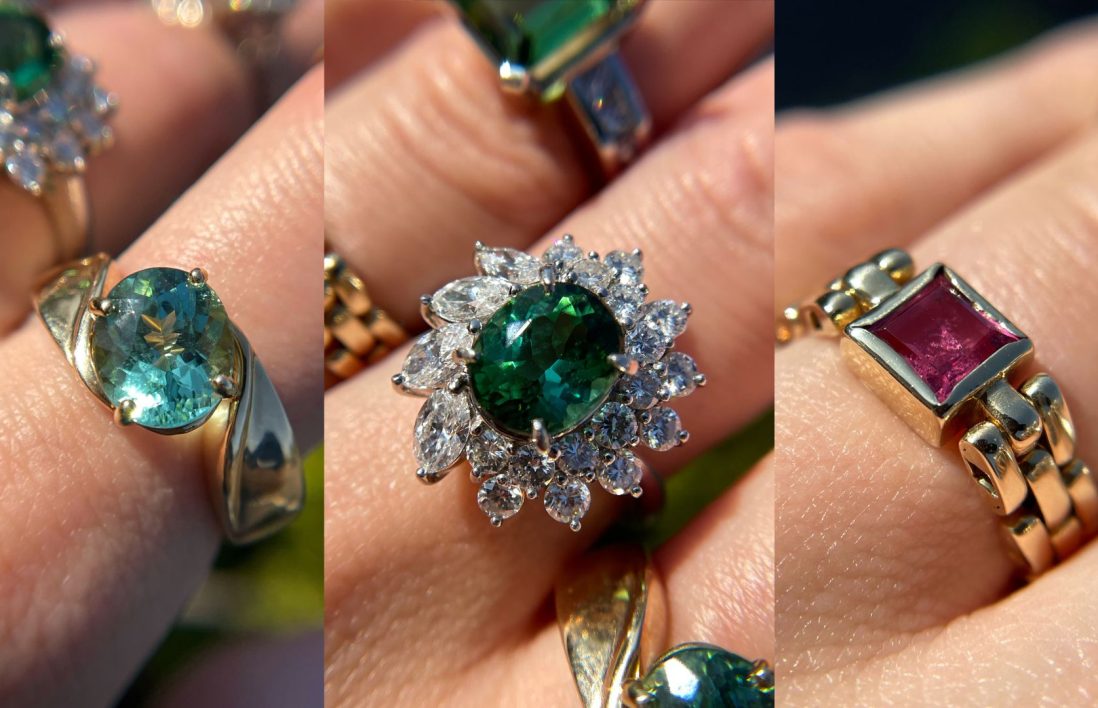
With the arrival of crisp autumn days and falling leaves comes October — and with it, a gemstone that is as vibrant and varied as the colors of the turning seasons. While many people know opal as October’s birthstone, this month’s second birthstone is equally captivating: tourmaline. This gem offers an extraordinary spectrum of hues, unique lore, and style versatility. Below, we dive into the story, beauty, and care of tourmaline — and why it deserves a place in your collection (or wishlist).
The Story & Symbolism of Tourmaline
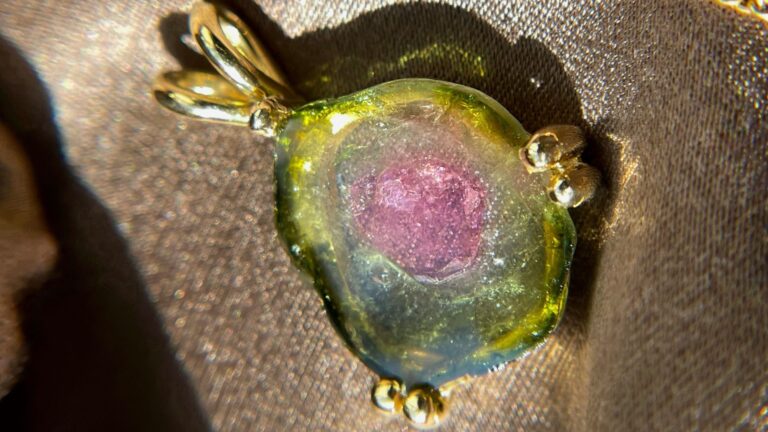
The name tourmaline comes from the Sinhalese toramalli, meaning “stone with mixed colors,” which is a wonderfully apt description: tourmaline is one of the most color-diverse gemstones in nature.
Because of this broad palette, ancient mystics associated tourmaline with artistic expression — the idea being that its many colors could reflect moods, feelings, or creative inspiration.
Historically, tourmaline was sometimes mistaken for other gems. For example, a famed “ruby” in the Russian crown jewels was later identified as red (rubellite) tourmaline. In Brazil, green tourmaline was once misidentified as emerald.
Because of its wide-ranging hues, different colors of tourmaline have been attributed distinct metaphysical qualities:
- Black tourmaline is thought to be protective and grounding.
- Pink tourmaline is linked with love, compassion, and gentleness.
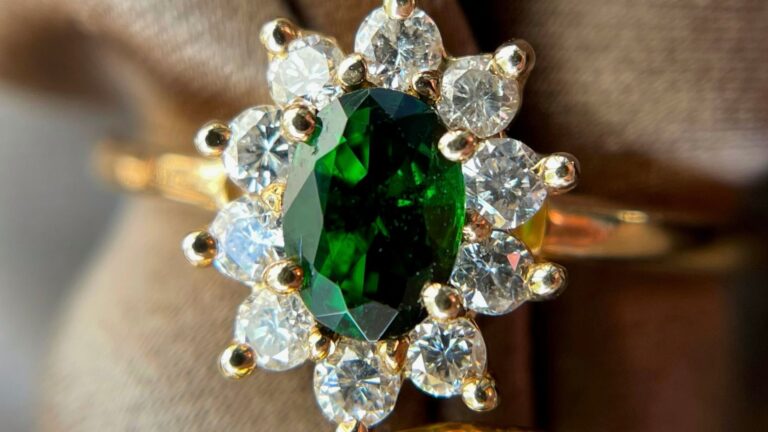
- Green tourmaline symbolizes courage, strength, and stamina.
Also, interestingly, tourmaline is the gem given to celebrate the eighth wedding anniversary.
Origins & Geographic Sources
Although tourmaline occurs in many regions, Brazil remains its most famous source. Many of the gem-quality tourmalines have come from pegmatites in Brazil’s Minas Gerais state.
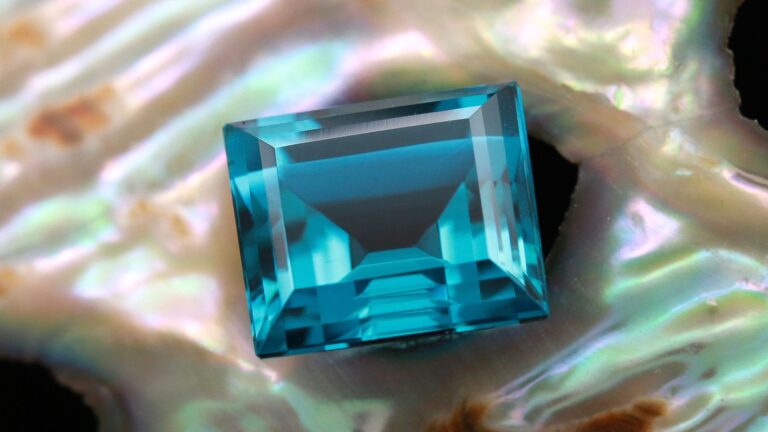
In the late 1980s, exceptionally brilliant copper-bearing tourmalines from Paraíba, Brazil made headlines. Their vivid blue-green to blue-violet hues are partially due to trace copper — a rarity in tourmaline chemistry. Later, copper-bearing tourmalines of comparable color quality were found in Mozambique and Nigeria.
Elsewhere in the world, tourmaline is mined in Africa (Mozambique, Kenya, Madagascar, etc.), Afghanistan/Pakistan, and in the U.S., especially in California and Maine. In Maine, for instance, the Mount Mica region and the Dunton mine have been historically significant sources.
What Makes a High-Quality Tourmaline?
To understand what makes a tourmaline gem truly exceptional, it helps to look at how gemologists evaluate it:
- Color & saturation: Because tourmaline comes in such a wide range of colors, the richness and evenness of hue often have the greatest impact on value.
- Clarity: Pink to red varieties tend to show more visible inclusions than green-blue ones.
- Cut & orientation: Tourmaline is strongly pleochroic, meaning it can show different colors when viewed from different directions. Cutters must pay attention to crystal orientation: sometimes the table of the gemstone is aligned to minimize dark zones or to maximize depth of color.
- Carat & rarity: Large, clean, saturated specimens become rarer quickly. As the size increases, value tends to rise disproportionately.
Durability & Care
One of the advantages of tourmaline over opal is its relative durability. Tourmaline ranks 7 to 7.5 on the Mohs hardness scale, which makes it more suitable for everyday wear than more delicate stones.
Still, tourmaline is not indestructible. A few care guidelines:
- Clean with warm, soapy water and a soft brush
- Avoid exposing it to high heat — elevated temperatures may alter or damage color
- Avoid sudden temperature changes (thermal shock)
- Store tourmaline separately so other harder gemstones don’t scratch it
With proper care, a well-cut tourmaline can be worn in rings, pendants, earrings, and more—and retain its brilliance for years.
Why Tourmaline Is a Great Gift (Especially in October)
- It offers wide color options, so you can pick a tone that matches the recipient’s style or favorite color
- Its link to healing, emotional balance, and creativity adds meaningful symbolism
- Because it’s the alternative (secondary) birthstone for October, it’s a fresh and thoughtful choice for October-born people
- It tends to be more durable (for daily wear) than many gemstones of comparable beauty
If you’re a jewelry lover, October-born, or simply someone drawn to color, consider adding a tourmaline piece to your collection. And if you’d like help selecting the perfect tourmaline gem (matching color, cut, clarity) or designing a custom setting, we’re here for you — explore our tourmaline jewelry [link to webpage] and let your style shine in October and beyond.